
A Teacher’s Lesson in Early Detection: How One Colonoscopy Changed Everything
Scott Brown has spent nearly 25 years helping students at Aliiolani Elementary School in Kaimuki find their “lightbulb moments.” As the school’s curriculum coordinator, he lives for the spark he sees when a lesson finally clicks, when a child connects with the content and walks out of his classroom a little more aware of who they are in this world.
But at age 50, Brown experienced his own life-changing moment, and it didn’t happen in a classroom. It happened during a routine colonoscopy at Straub Benioff Medical Center.
That single screening revealed stage 1 colon cancer. And because his cancer was caught so early, that colonoscopy may have saved his life.
A Family History That Hit Close to Home
“As I was getting closer to his age, it really hit home,” Brown said. “I was aware of my own mortality, and I didn’t want the same outcome as my father.”
That loss remained with Brown. It shaped how he thought about his own health and motivated him to stay on top of routine checkups. So when his doctor at Straub Benioff told him it was time for a colonoscopy, he didn’t think twice.
Getting Screened Was Easier Than He Expected
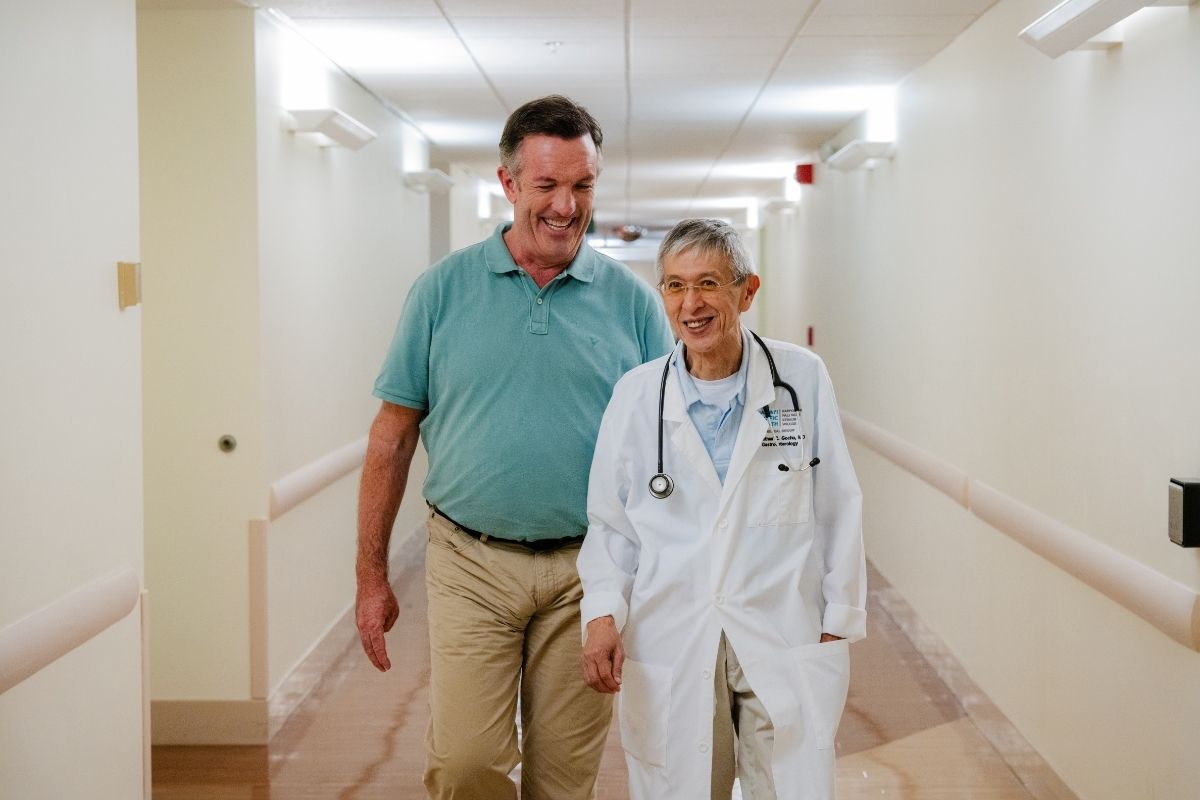
Brown was pleasantly surprised by how smooth the process was. The Gastroenterology Department at Straub Benioff was quick to respond, and he had an appointment within days. The endoscopy team walked him through every step, from what to expect during the procedure to how to prepare.
The preparation, Brown admits, was the hardest part. At the time, it meant drinking a full gallon of liquid laxative over the course of an evening, with a dose every 15 minutes and regular trips to the bathroom.
“It’s a burden, but in the grand scheme of your entire health, it’s just a drop of your time,” he said.
Brown noted that the prep has gotten even easier in recent years. Some patients now only need to drink two small bottles instead of an entire gallon.
A Word No One Expects to Hear
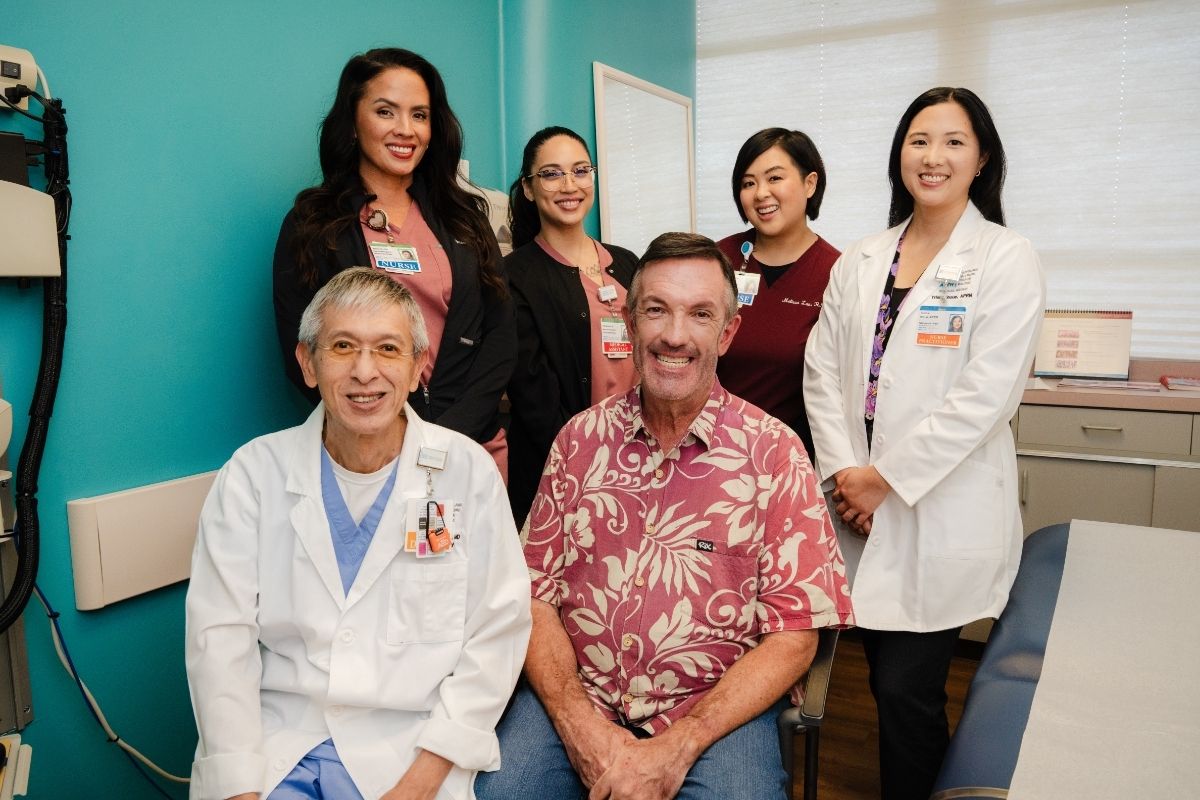
When the results came back, Brown learned he had polyps, including one spot that turned out to be stage 1 colon cancer. Dr. Jonathan Gochu, a Hawaii Pacific Health Medical Group gastroenterologist at Straub Benioff, had identified the growth during the procedure.
“The word ‘cancer’ is something you aren’t expecting to hear,” Brown said. “But they caught it very early.”
Because the cancer was found at stage 1, the tumor didn’t have time to spread. All Brown needed was a colon resection – a surgery to remove the affected part of the colon. He did not require chemotherapy or radiation.
Care That Felt Personal
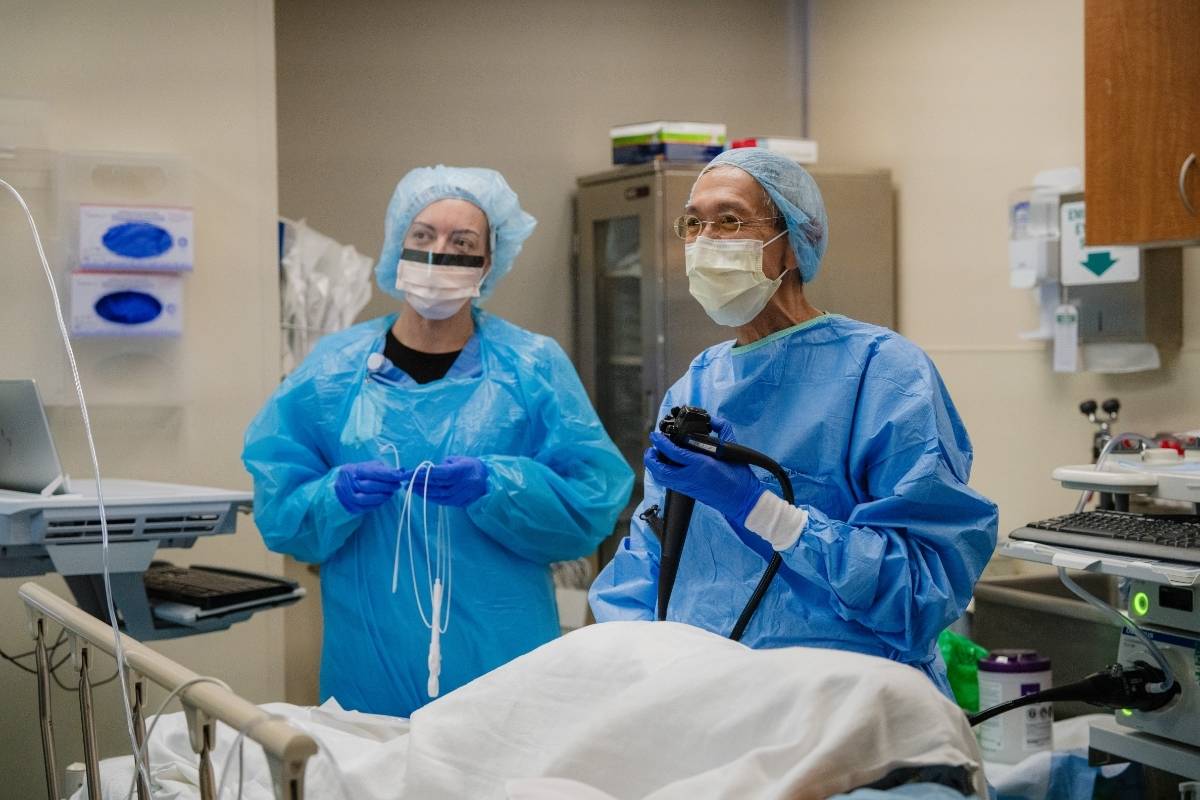
Beyond the medical expertise, it was the personal touches that stood out to Brown. He recalled going under to the sound of “Stairway to Heaven” playing in the procedure room. It was a song Dr. Gochu had chosen that helped put him at ease.
“When I woke up, the staff was right there to reassure me,” Brown said. “Every time I see Dr. Gochu now, he asks about my family and my career. He remembers every detail about me.”
Why Early Screening Matters
Dr. Gochu said Brown’s case shows exactly why routine colonoscopies are so important.
“The great thing was that we were able to catch the cancer early,” Gochu said. He explained that finding it at stage 1 meant Brown could avoid the more aggressive treatments he would have needed had he waited.
Dr. Gochu said receiving a cancer diagnosis is never easy, even when the outlook is good. But because Brown came in on time and followed the recommended screening schedule, they were able to act quickly.
“Scott is a role model for patients who follow through,” Gochu said. “He came in when he was supposed to do the procedure, followed instructions and has been coming back so we can keep him healthy for his family.”
Living With Gratitude
Today, Brown says that first colonoscopy gave him something he didn’t expect: peace of mind. With his cancer diagnosis behind him, he has embraced every chance to enjoy life. He loves traveling with his wife and two daughters, spending time at the beach and creating meals for his family in the kitchen.
“I always keep my dad in my heart because he’s the reason I listen to the doctors and take care of myself,” Brown said.
A Message for Anyone on the Fence
For anyone who’s been putting off their screening, Brown’s advice is simple: don’t wait.
“You don’t know what might be going on inside,” he said. “I didn’t realize what was happening to me, and I’m so thankful I did the procedure. For me, early detection made all the difference.”
The American Cancer Society recommends that adults at average risk begin regular colorectal cancer screenings at age 45. If you have a family history of colorectal cancer or polyps, talk to your primary care provider about starting earlier.
Watch the video below for Scott's full story and to hear more about this inspiring story of hope.
Published on: March 18, 2026