Use Your Head – Wear a Helmet
Published April 20, 2026
Key Takeaways
- Why helmets are essential for helping protect children from serious head injuries while biking, skateboarding, or skating.
- How to choose a helmet that fits properly and meets important safety standards.
- A simple fit test parents can use to make sure a child’s helmet is snug, level and secure.
- Ways to encourage keiki to wear their helmets every ride, including letting them help choose one and modeling safe behavior.
Sports such as bicycling, skateboarding, and inline skating account for 50% of head injuries that occur in children engaged in recreational activities.
In fact, more children ages 5 to 14 are seen in emergency departments for injuries related to bicycling than any other sport.
The simple act of strapping on a helmet can reduce the risk of severe brain injuries by 88%. But, according to a national survey conducted by the Centers for Disease Control and Prevention, only 48% of children ages 14 and younger wear a helmet while bicycling.
“Wearing a properly fitted helmet protects your skull and brain from injuries during falls. Any bicyclist who does not wear a helmet is at increased risk of head injury,” says Dr. Robert Wortring, a Hawaiʻi Pacific Health Medical Group pediatrician based a Kauaʻi Medical Clinic who's also the section chief of community pediatrics on Kauaʻi.
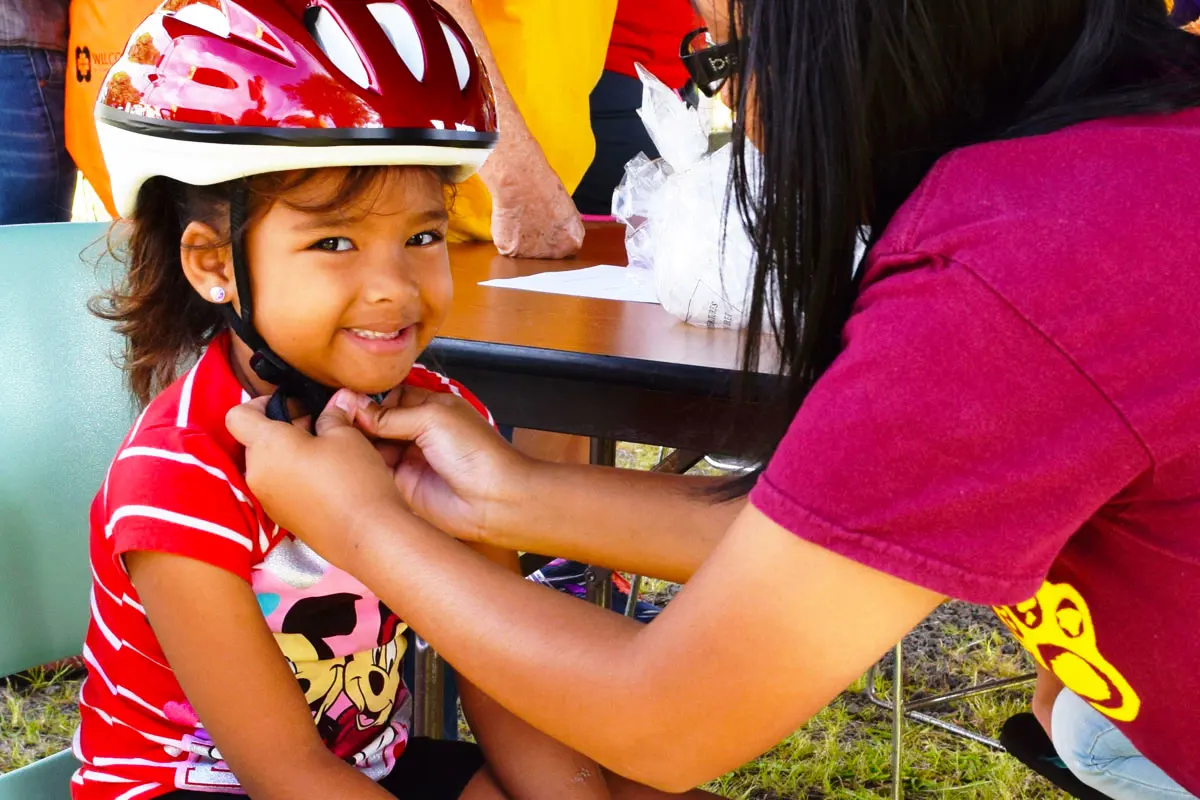
Before your keiki pedal out the door, make sure they have on a properly fitted helmet.
How Do You Know If Your Child's Helmet Fits?
The right helmet for your child should be:
- Snug. It does not slide from side to side or front to back. Both the side and chin straps need to be snug.
- Level. It is square on top of the head, covering the top of the forehead. It does not tilt in any direction.
- Stable. The chin strap should be buckled at all times when riding, but not too tightly.
Helmet Fit Test: Look for These Three Things
When buying a helmet for your child, be sure to choose a helmet that fits your child now, not one he or she will grow into. Have your keiki perform the following fit test:
- Eyes. Put the helmet on your head. Look up. You should see the bottom rim of the helmet. The rim should be one to two finger widths above the eyebrows.
- Ears. Make sure the straps form a “V” under your ears when buckled. The straps should be a little tight but comfortable.
- Mouth. Open your mouth as wide as you can. Does the helmet hug your head? If not, tighten the straps.
Making Helmet Safety a Habit
You should only buy a helmet that meets the bicycle helmet safety standards of the Consumer Product Safety Commission. Any helmet meeting these standards is labeled. Check the inside for a label.
“Allow children to have a choice in the color and style of their helmet,” adds Dr. Wotring, noting children will be more apt to wear something they had a say in picking out.
“Educate them on the purpose of wearing a helmet,” Dr. Wotring says. “And be a role model and wear your helmet.”
Hawaiʻi state law requires that all kids younger than age 16 wear a properly fitted helmet while riding a bike.
Visit the National Highway Traffic Safety website for more information on bicycle safety.


