High Blood Pressure is a Silent Threat – Here’s How to Take Control
Published July 30, 2026

Key Takeaways
- High blood pressure often has no symptoms, but it can raise the risk of stroke, heart attack, kidney disease, and heart failure.
- Healthy habits, regular blood pressure checks, and early conversations with your doctor can help prevent or manage hypertension.
- For some patients, a new minimally invasive procedure called renal artery denervation may help lower blood pressure when medication and lifestyle changes are not enough.
One in three adults in Hawaiʻi has high blood pressure, according to the 2026 Hawaiʻi Cardiovascular Disease fact sheet. Rates are higher for Asian Americans, Native Hawaiians, and Pacific Islanders.
High blood pressure, also known as hypertension, is the leading cause of stroke and a major cause of heart attacks.
Sometimes medication and lifestyle changes are not enough to bring blood pressure down. Recently, Dr. John Kao, a Hawaiʻi Pacific Health Medical Group interventional cardiologist and chief of cardiology at Pali Momi Medical Center, began performing a new, minimally invasive procedure called renal artery denervation at Pali Momi. Here, he discusses the treatment, as well as the risks associated with hypertension and preventive measures.
Why is high blood pressure a serious problem?
Hypertension is a silent killer. You may not see it or feel it, but elevated blood pressure affects every single organ system. It increases the risk of strokes, kidney disease, and heart failure, and is the most preventable cause of cardiovascular death worldwide.
Many don’t know they have high blood pressure until they come into the hospital with kidney failure, heart failure, a heart attack, or a stroke.
Pali Momi is the only STEMI Center, Primary Stroke Center, and Level III Trauma Center in Central and West Oʻahu. We know that when a person has a serious heart attack or stroke, it often affects the entire family. Some patients will have a lengthy recovery or require long-term care, and a family member may have to quit work or make life changes. So, prevention not only helps take care of patients; it also takes care of our community.
How can people prevent high blood pressure?
In most cases, hypertension is 100% preventable. A healthy diet, exercise, getting enough sleep, and avoiding smoking can all help.
Consistent use of energy drinks, metabolism boosters, and some weight-loss medications can contribute to high blood pressure.
I encourage all my patients to check their blood pressure several times a week. Blood pressure goes up and down depending on what you’re doing, how you’re feeling, and what’s going on.
Occasional spikes are normal, but if it doesn’t go back down, talk with your physician.
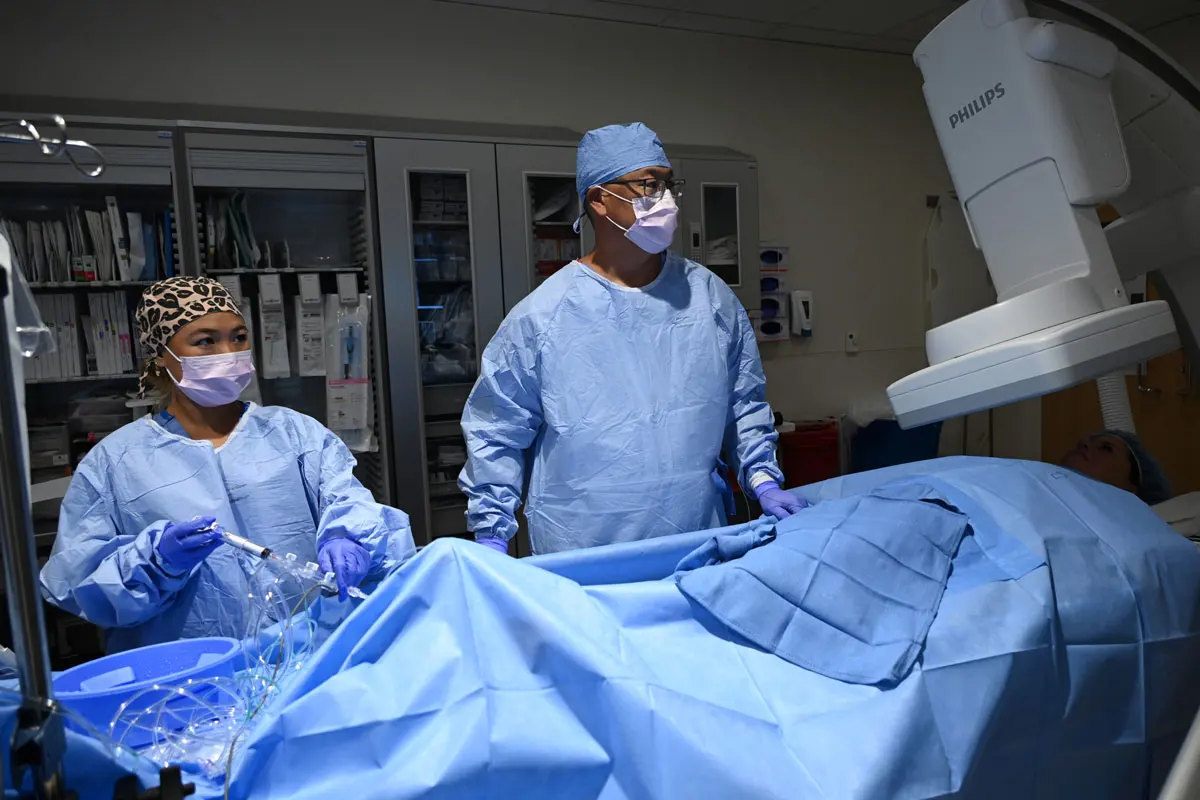
Dr. John Kao (right) and Megan Nakai, Pali Momi cardiac catheterization lab technician, attend to a patient.
What treatment options are available when medication and lifestyle changes aren't enough?
Renal artery denervation is when localized heat is used to ablate or intentionally damage nerves that send signals to raise blood pressure. Pali Momi was the first in Hawaiʻi to offer this procedure with the Symplicity Spyral system, which utilizes radiofrequency energy.
We are currently getting referrals from primary care physicians, hospitalists, nephrologists, and others to evaluate patients who may benefit.
The outpatient procedure takes about an hour. Patients are sedated so they don’t feel anything. We go through the femoral artery – the artery right over the hip joint – into the kidneys and do the ablation. Then, we monitor patients for a few hours and if everything is OK, they can go home.
Renal artery denervation won’t instantly normalize blood pressure. Patients will usually see a 5- to 10-millimeter drop in the first three months, and our team or their primary care physician can adjust medication as needed. A 5-millimeter decrease may not sound like a lot, but even a small drop significantly reduces the risk of stroke and heart attack for all ages.
What’s very impressive is that the results last and continue to improve. Studies show that about three years after renal denervation, patients see up to a 20-millimeter drop in blood pressure.
This article was first featured in the July 29, 2026, issue of MidWeek as a part of the “Dr. in the House” series. See the full publication.


