How CAR T-Cell Therapy Helps Your Immune System Fight Cancer in a New Way
Published Aug. 20, 2026
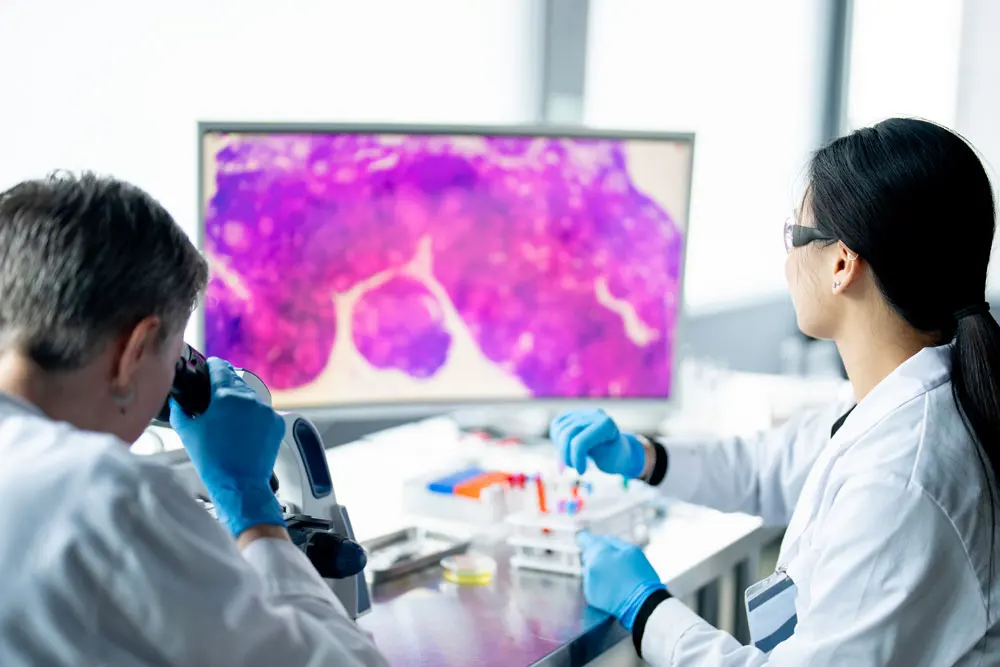
What if your immune cells could be trained to better recognize and fight cancer? CAR T-cell therapy is a personalized cancer treatment that uses a patient’s own immune cells to target certain cancers.
When people think about cancer treatment, chemotherapy and radiation are often the first options that come to mind. But cancer care continues to evolve, and one promising advancement is CAR T-cell therapy, a specialized type of immunotherapy that uses the body’s own immune system to help fight cancer.
At Hawaiʻi Pacific Health medical centers, this innovative treatment is now available to eligible patients locally, helping more people access advanced cancer care without having to travel far from home.
Dr. Stephanie Si Lim, a Hawaiʻi Pacific Health Medical Group pediatric hematologist/oncologist based at Kapiʻolani Medical Center for Woman & Children and researcher at the University of Hawaiʻi Cancer Center, recently appeared on Hawaiʻi News Now “Sunrise” to talk more about this treatment and how it’s advancing care for patients in Hawaiʻi.
Watch the Interview: Dr. Stephanie Si Lim Explains CAR T-Cell Therapy
View transcript
JOLANIE MARTINEZ: When it comes to cancer treatment, chemotherapy, and radiation typically are the first that come to mind. But there's one treatment you may not have heard of called CAR-T therapy, which is a special type of immunotherapy. Dr. Stefany Si Lim is an oncologist and medical director of the Cellular Immunotherapy Program at Hawaiʻi Pacific Health. She's also a researcher at the University of Hawaiʻi Cancer Center. Dr. Lim, what is immunotherapy and how is it different from what we think of as traditional cancer treatments?
DR. STEPHANIE SI LIM: So, the concept of immunotherapy has actually been around for a very long time, but it wasn't until recently that we really have a better understanding of how it really works. Immunotherapy is a special type of therapy where we use the patient's own immune system to fight cancer. So, it's a little bit like traditional chemotherapy where it nonspecifically attacks all rapidly dividing cells. And so of course it gets cancer cells, but you also get to avoid those bad side effects that we all know too well, such as hair loss, nausea, etc.
JOLANIE MARTINEZ: And Hawaiʻi Pacific Health offers an immunotherapy treatment that's new to the state, right? And can you tell us about that?
DR. STEPHANIE SI LIM: Yes, we are so excited to be able to offer this new, innovative, life-saving therapy now to the people of Hawaiʻi, which is called CAR-T therapy, or it stands for “chimeric antigen receptor T-cell therapy.”
CAR-T therapy is unlike traditional chemotherapy also in that you don't just order the drug from like, let's say, a manufacturing company. It starts with the process of collecting the patient's own immune cells, you genetically modify it, and then you give it to the patient. And so, it usually takes about four weeks or so for the cells to be made. And then the process of giving the cells back to the patient really only takes a couple of minutes or so.
And here in Hawaiʻi, we actually do it in an outpatient setting, and so patients can go home the same day. Thereafter, we just have the patients come back to clinic to make sure that they don't have bad side effects from the treatment.
JOLANIE MARTINEZ: Can all cancer patients get this treatment?
DR. STEPHANIE SI LIM: Right now, there are only seven FDA-approved CAR-T products that are available, and only for patients who have failed previous lines of blood cancer. So patients with difficult-to-treat leukemia, lymphoma, and multiple myeloma.
Now, with that said, since 2022 at Hawaiʻi Pacific Health, our cellular immunotherapy program is proud to have treated close to 30 patients all across the states. This is huge for us because it really allows patients to stay at home who are sick – stay at home to be close to their family, their friends, their support system, without having traveled thousands of miles away to the mainland to get access to this innovative therapy.
JOLANIE MARTINEZ: And looking ahead, what's the future of CAR T?
DR. STEPHANIE SI LIM: You know, I think I cannot emphasize enough about the exciting world of immunotherapy right now, because I think as of right now, there are probably thousands of CAR-T clinical trials out there that looking for ways of targeting different types of cancers and not just blood cancers. And so, I would say that within the next five years, you're going to have CAR-T therapy available for different types of cancer, like breast cancer, lung cancer, prostate cancer. And within my own research, I'm focused on better understanding how the immune system differs between races and ethnicities, and really how that translates to treatment outcomes, which will be very important for us here in Hawaiʻi.
JOLANIE MARTINEZ: Well, thank you so much, Dr. Lim, for your time and all that you do. And thank you for making this a healthier Hawaiʻi.
Dr. Stephanie Si Lim, a Hawaiʻi Pacific Health Medical Group pediatric hematologist/oncologist based at Kapiʻolani Medical Center for Women & Children and a researcher at the University of Hawaiʻi Cancer Center, joined Hawaiʻi News Now to discuss the advancements in cancer care, specifically a treatment known as CAR T-cell therapy.
What is Immunotherapy?
According to Dr. Si Lim, immunotherapy is a type of cancer treatment that helps the immune system better recognize and attack cancer cells.
“The concept of immunotherapy has actually been around for a very long time, but it wasn't until recently that we really have a better understanding of how it really works,” she said.
Unlike chemotherapy, which targets rapidly dividing cells throughout the body, immunotherapy is designed to help the body identify specific markers on cancer cells and respond more directly.
“It gets cancer cells, but you also get to avoid those bad side effects that we all know too well, such as hair loss, nausea,” Dr. Si Lim said.
That doesn’t mean chemotherapy is no longer important. In many cases, chemotherapy remains a key part of a patient’s treatment plan and may be used along with immunotherapy. The right approach depends on the type of cancer, how it has responded to previous treatments, and a patient’s overall health.
How CAR T-Cell Therapy Turns Immune Cells into Cancer Fighters
CAR T-cell therapy stands for “chimeric antigen receptor T-cell therapy and is a highly personalized form of immunotherapy.
“CAR-T therapy is unlike traditional chemotherapy in that you don't just order the drug from like, let's say, a manufacturing company,” Dr. Si Lim explained.
Rather, the treatment begins with collecting a patient’s T cells, which are white blood cells that play an important role in the immune system. Those cells are then changed in a laboratory so they can better recognize and target cancer cells. Once ready, they are returned to the patient through an infusion.
“Here in Hawaiʻi, we actually do it in an outpatient setting, and so patients can go home the same day. Thereafter, we just have the patients come back to clinic to make sure that they don't have bad side effects from the treatment,” Dr. Si Lim said.
Who Could Benefit from CAR T-Cell Therapy?
CAR T-cell therapy is not right for every patient or every type of cancer. It is often considered for people with certain blood cancers whose disease has returned or has not responded to other treatments.
"Right now, there are only seven FDA-approved CAR-T products that are available,” Dr. Si Lim said. “Now, with that said, since 2022 at Hawaiʻi Pacific Health, our cellular immunotherapy program is proud to have treated close to 30 patients all across the states. This is huge for us because it really allows patients to stay at home who are sick – stay at home to be close to their family, their friends, their support system, without having traveled thousands of miles away to the mainland to get access to this innovative therapy.”
Learn More
Watch the full interview to learn more about CAR T-cell therapy and what it may mean for eligible cancer patients and their families.
This segment originally aired Aug. 19, 2026, as part of the Hawaiʻi News Now "Sunrise" Healthier Hawaiʻi series.


