Leila-Rose Coloma
Published Oct. 21, 2019
Wall of Hope: Stories of Courage & Inspiration
Kayley Coloma had experienced a perfect pregnancy with her daughter, Leila-Rose.
However, when Kayley was 37 weeks along, she noticed her once-active baby no longer was moving as much as before.
“I remember waking up the next morning and I just had this funny feeling that maybe I should call my OB, but a part of me was just kind of like nah, she’s fine, just keep an eye on it. I went to work and after talking to a coworker about it, she validated my gut feeling that I should call my OB to be checked out,” Kayley says.
Her doctor arranged for a fetal diagnostic test at a nearby clinic.
Upon taking several heart rate readings, the attending nurse informed Kayley that she would be delivering Leila that day, and that she needed to get to Kapiʻolani Medical Center for Women & Children right away.
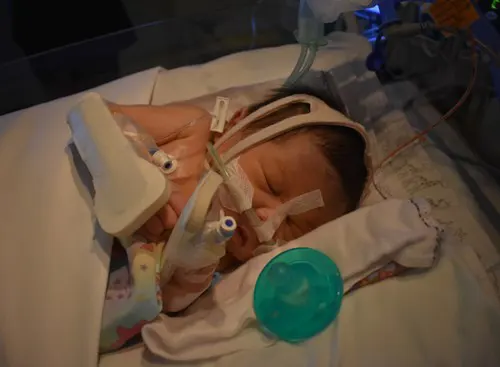
“They said her heart rate was very fast and they needed to do an ultrasound to know the exact rate,” Kayley says. “We found out her heart rate was extremely fast at 265 bpm. This was not good, and I was taken by ambulance to Kapiʻolani and had an emergency C-section.”
After Leila was born, she was whisked away to the Neonatal Intensive Care Unit, where an electrocardiogram and echocardiogram test performed by Cardiologist Dr. Andras Bratincsak diagnosed the newborn with the heart conditions Ebstein anomaly and Wolff-Parkinson white syndrome.
“My husband and I were scared, shocked, and confused. We thought everything was totally normal with her since all my ultrasounds and tests were all normal, and there was never any indication that anything was wrong,” Kayley says. “I have a congenital heart defect, but since all my ultrasounds and testing were all normal there was no indication to do further testing of her heart.”
Leila remained in the NICU for five weeks to allow her heart rate to normalize before she could be sent home with oral medications and a heart-rate monitor.
Between April 19 and May 28, 2017, Leila would need to go to the Emergency Department four times to adjust her medications. After the fourth visit she was admitted to the Pediatric Intensive Care Unit and placed on a continuous IV.
She stayed in the PICU for five weeks before being transferred to Rady Children’s Hospital in California for open-heart surgery.
Leila was 5 months old.
While appreciative of the care bestowed to her child, Kayley says she also is grateful for the behavioral health services offered to family members of patients.
“When you are going through something like what we went through with Leila, you are not thinking ‘I should maybe talk to someone about how I’m feeling and everything that’s going on,’” she says. “You are so focused on your child and their well-being, you don’t think about yourself. So the fact that they think about that for you and reach out to you is amazing. They focus on the family as a whole to make sure that, yes your child is receiving great care, but so are you as a parent.”
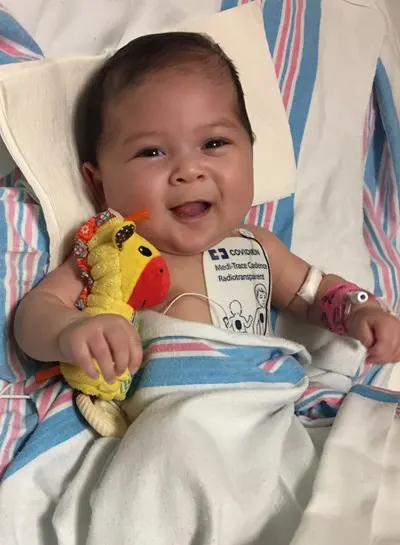
"She is truly such a bright light in our lives. She is so resilient and happy, and we are so grateful for that."
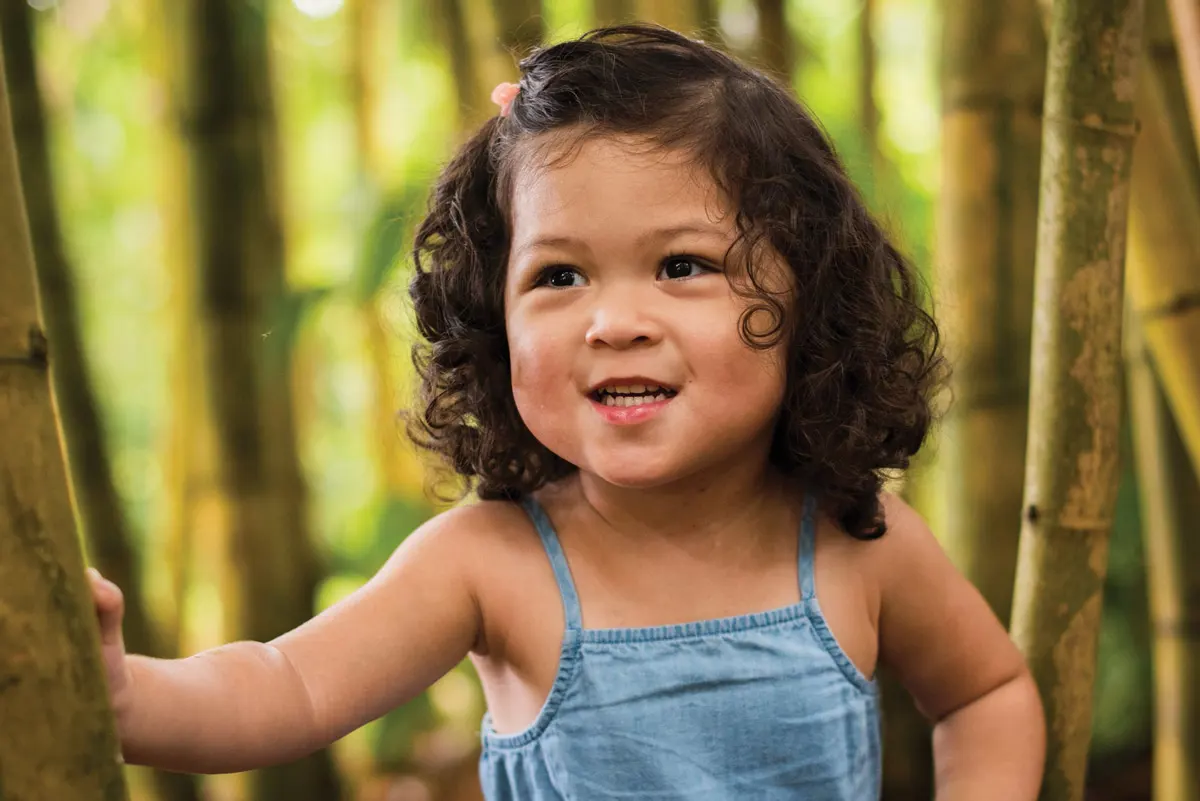
Kayley is happy to report that Leila is doing amazing today.
The 2-year-old is extremely outgoing and active, with a huge personality that makes everyone around her smile.
“She is truly such a bright light in our lives. She is so resilient and happy, and we are so grateful for that,” Kayley says, sharing that there remains a lot follow-up care and surgeries in Leila’s future.
“We are just so grateful for Kapiʻolani and all the amazing staff, because without them we’re not sure where we would be today,” Kayley says. “They saved Leila and have been a part of her life from the day she was born. We cannot say thank you enough.”


