Colon Cancer is Rising in Younger Adults – Here's Why Screenings Matter
Published March 13, 2026
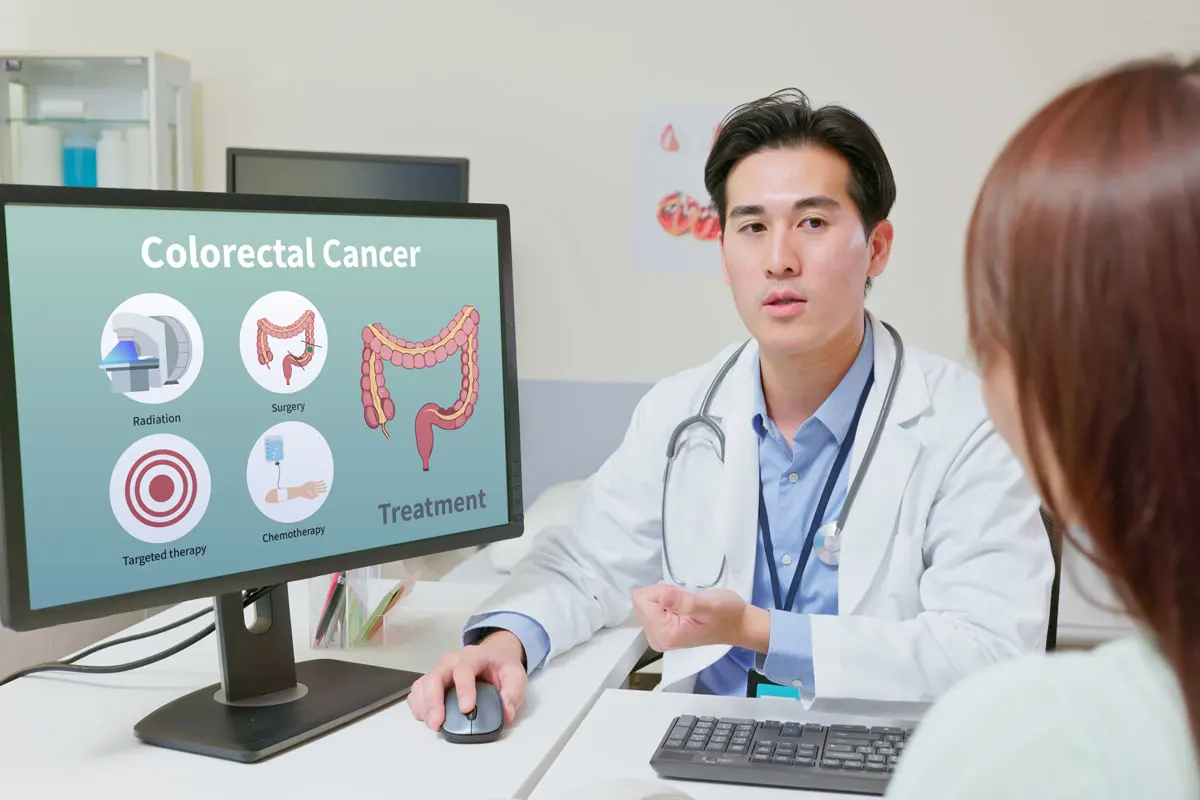
With incidents of colorectal cancer on the rise in younger adults, national screening recommendations now advise colorectal cancer screenings begin at age 45 for average-risk adults.
Colorectal cancer is now the leading cause of cancer deaths among people younger than 50, according to a recent American Cancer Society study.
The trend helped drive a change in national screening recommendations in recent years, with guidelines now advising average-risk adults begin colorectal cancer screening at age 45.
Regular screenings matter because colorectal cancer often develops silently.
"One of the big problems is colon cancer often doesn't have any symptoms, and that's the importance of doing a colonoscopy," said Dr. Timothy Swindoll, Hawaiʻi Pacific Health Medical Group chief of gastroenterology, who also sees patients at Straub Benioff Medical Center.

Dr. Timothy Swindoll (right) with Hawaiʻi News Now Sunrise anchor Steve Uyehara.
In addition to being a prevention tool, colonoscopies can be used to treat cancerous polyps, if caught early.
"We can remove small precancerous polyps before they become a problem. Sometimes, we can even remove cancerous polyps and that's curative of the cancer," Dr. Swindoll said. "If it's more advanced, you might need surgery or chemotherapy, but even then, if it's caught early, you have a great life expectancy and survival rate."
In observance of Colorectal Cancer Awareness Month, Dr. Swindoll sat down with Hawaiʻi News Now "Sunrise" anchor Steve Uyehara to talk about colon cancer symptoms, the importance of colonoscopies, and common myths he hears in his practice.
This segment originally aired March 11, 2026, as part of the Hawaiʻi News Now "Sunrise" Healthier Hawaiʻi series. Watch the full broadcast here or above.


