Inside Pali Momi’s Emergency Department: Meeting Growing Needs with Innovation and Teamwork
Published July 1, 2026
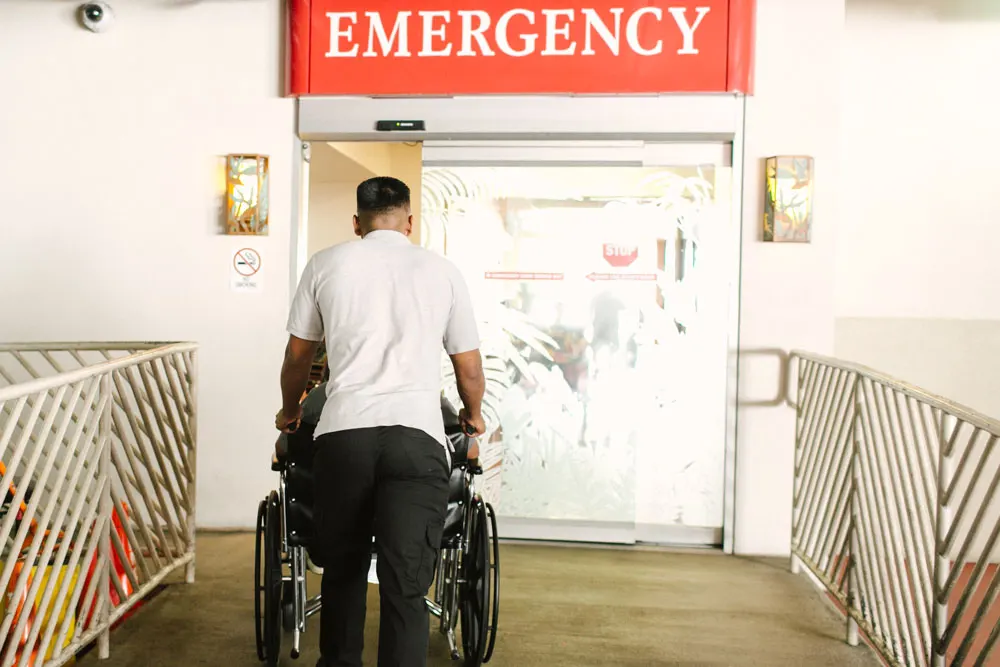
Laulima, a new area of Pali Momi's Emergency Department, provides a place where patients with less serious conditions can be evaluated and treated in a more comfortable setting.
"What makes Pali Momi different is the strength of its culture. There's a deep sense of pride in serving our community, and that pride shows up in how people treat one another and how they care for patients."
When people in West Oʻahu need Emergency care, they turn to Pali Momi Medical Center.
Pali Momi is the only Level III Trauma Center and the only Primary Stroke Center serving the region. It has the only interventional cardiac catheterization laboratory to detect and treat heart disease in Central and West Oʻahu.
A Growing Need for Emergency Care in Central and West O‘ahu
In 2025, Pali Momi's Emergency Department treated nearly 45,000 patients, and leaders there say the demand for emergency medical services has continued to grow.
"In Pali Momi's Emergency Department, we see the full spectrum of humanity," says Dr. Roderick "Derick" Alfonso, the Emergency Department's medical director. "Health touches all walks of life, and we are there for people during some of the hardest moments they will ever experience. In the same shift, we might be providing a turkey sandwich to one patient, listening to another who is having a psychiatric crisis, and delivering lifesaving intervention to others. There's no question that we have to be creative, adaptable, and willing to roll up our sleeves."
Laulima: A More Comfortable Space for Less Serious Conditions
One example of this type of creative, adaptable thinking is Laulima, a new area of Pali Momi's Emergency Department. Located on the second floor, it's a place where patients with less serious conditions are evaluated and treated in a more comfortable setting.
"Laulima is not separate from the Emergency Department; it's a reflection of what our ED does best," Alfonso says. "We've seen improvements across the board: patient experience, care team experience, patient wait times, and overall efficiency of care. Most importantly, patients feel that they are being cared for in a space designed for healing.
"Before Laulima. when we were extremely busy, we often had to expand into an area that didn't feel particularly private or healing," he continues. "We needed a space that improved both the patient and care team experience."
Keeping Emergency Beds Open for the Most Critical Cases
By moving patients with less serious medical conditions to exam spaces in Laulima, Pali Momi also keeps more beds open in the original ED area for serious medical cases.
"Emergency medicine is unique in that we provide a service to our community 24/7, 365 days a year," Alfonso says. 'We have to know a little bit of every specialty, and in many cases, when someone is critically ill or injured, the Emergency Department may be the last barrier between life and death."
Caring for a Community Requires Trust, Skill, and ‘Ohana
Adjusting the system to better serve patients also helps the ED team – the physicians, nurse practitioners, physician assistants, nurses, and technicians who are providing the lifesaving care.
"Emergency medicine is very much a team sport," Alfonso says. ''Together, we organize the chaos. From the moment a patient walks through the door, it takes greeters, technicians, nurses, physicians, advanced practice providers, environmental services, transporters, and more all working in sync. There's a deep sense of pride in serving our community, and that pride shows up in how people treat one another and how they care for patients.
"I've worked in other emergency departments, including large, high-volume urban centers like New York City,” he adds. ''What makes Pali Momi different is the strength of its culture. There is a true 'ohana here – not just in name but in practice."
This article was first featured in the Summer 2026 issue of Go Kapolei Magazine. See the full publication.


