Growing Stronger Together with Expert Pediatric Rehabilitation Care
Published Aug. 27, 2026
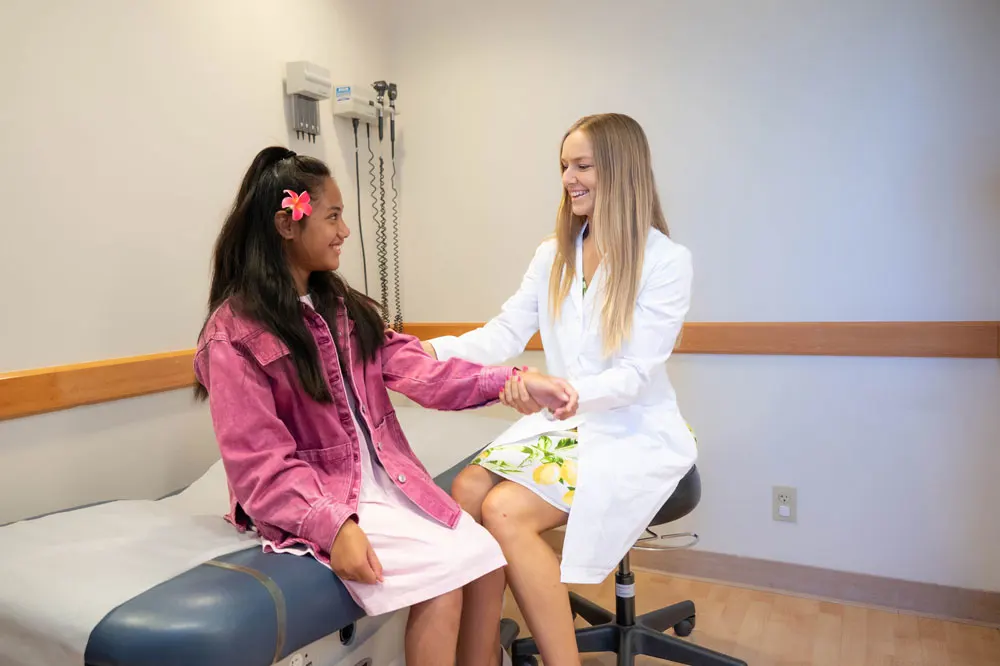
Dr. Mary Craig (right) examines 12-year-old Moana Sunia during an exam at Kapiʻolani Medical Center for Women & Children.
"Pediatric rehabilitation is very family-centered. Parents, caregivers, and siblings are all important parts of the team."
Dr. Mary Craig, a Hawaiʻi Pacific Health Medical Group physical medicine and rehabilitation physician based at Kapiʻolani Medical Center for Women & Children, has an important role in enhancing the lives of Hawaiʻi’s keiki. She specializes in rehabilitation for children, including some who may need extended rehabilitation to help them become as independent as possible.
She and the dedicated Kapiʻolani team provide essential services for kids and families year-round. Here, Dr. Craig discusses her work with young patients, their families, and her coworkers.
What types of conditions do you treat?
I treat children and teenagers with conditions that affect physical development, movement, and independence. These include:
- Cerebral palsy
- Brain injuries
- Spinal cord injuries
- Neurodevelopmental disorders
- Neuromuscular disorders
- Spina bifida
- Other neurologic or musculoskeletal conditions
My goal is to help each patient reach their greatest potential using nonsurgical treatments such as therapy, medications, adaptive equipment, and braces to support mobility.
What kinds of skills do you work on improving?
Rehabilitation helps children live as fully and independently as possible every day.
Each child is unique and may have different goals.
For one, it may mean learning to walk or improving balance and coordination.
For another, it may mean reducing pain or muscle tightness, improving the use of their hands, finding the right adaptive equipment, or making it easier to communicate and participate in school.
I work with them and their families to identify what is most important, then develop a plan.
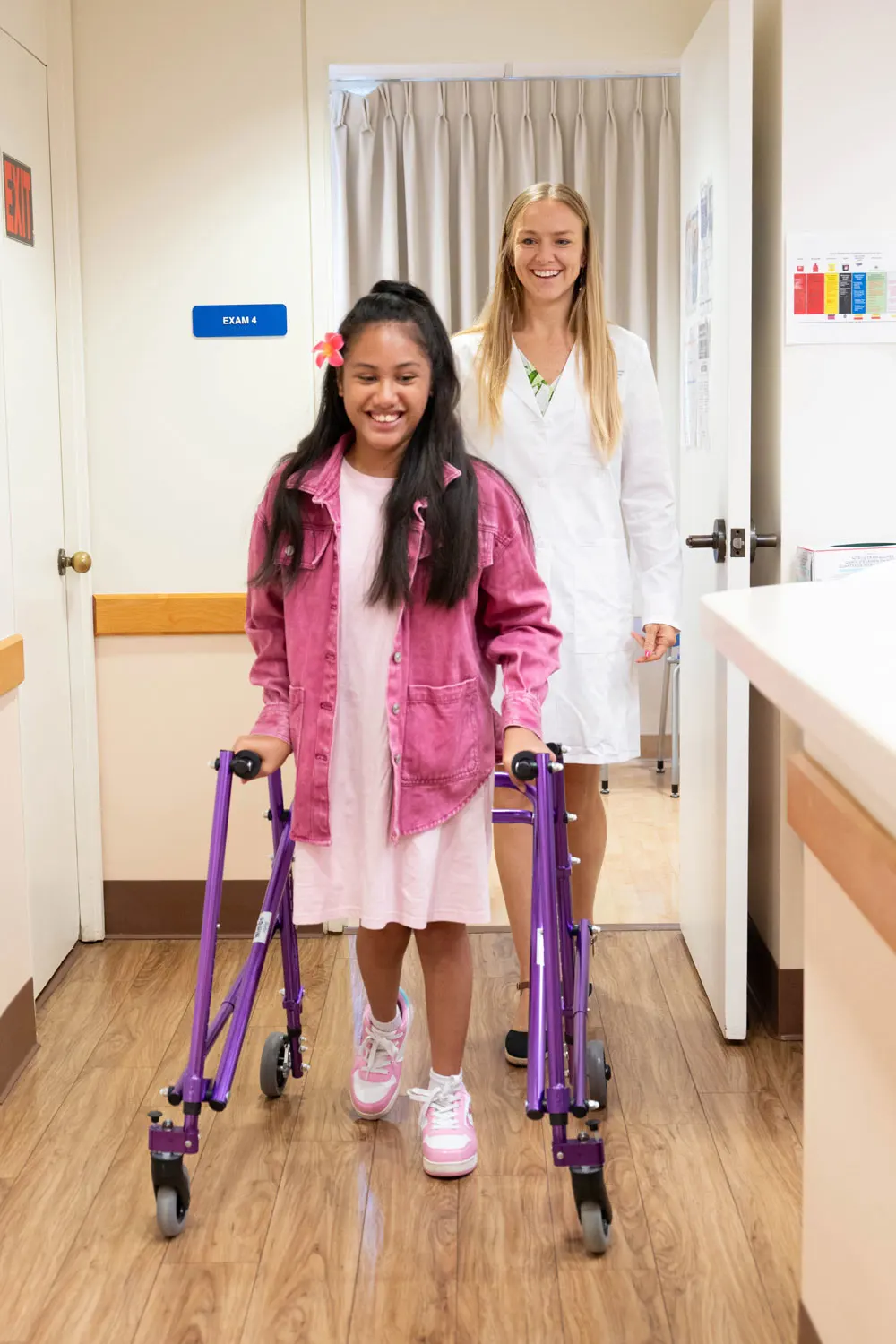
Dr. Mary Craig watches as her patient goes through the steps of her pediatric rehabilitation treatment plan.
How long do you typically work with a patient?
For patients with lifelong conditions, I care for them for years, sometimes from infancy through young adulthood. Others recovering from an illness, injury, or surgery may have a shorter treatment plan.
One of the things I enjoy most about pediatric rehabilitation is getting to know my patients and their families over time. As children grow, their goals and needs change, so our rehabilitation plans change with them. My role may look very different when a child is 2 years old compared with when they are 14 or 18.
What are the main differences between rehabilitation for adults and kids?
Children are constantly growing and developing, so we adjust equipment, plans, and goals as they transition to adulthood. Pediatric rehabilitation is very family-centered. Parents, caregivers, and siblings are all important parts of the team. We often work closely with school administrators, therapists, and other specialists to help kids do well and find activities they love.
What other specialists or Kapi‘olani staff do you work with to create a patient's care plan?
We have an amazing team at Kapiʻolani. I collaborate daily with physical, speech, and occupational therapists; assistive technology specialists; and other providers to structure patient rehabilitation plans. We may order custom adaptive equipment and braces, as well as provide recommendations to schools for accommodations.
I also see patients in our complex care clinic, work with orthopedic providers from our Bone & Joint Centers, and treat kids who are admitted to the medical center.
What is your favorite part of your job at Kapiʻolani?
I absolutely love the patients and families I have the privilege of caring for here in Hawaiʻi. I feel incredibly honored to work with children from every neighborhood and to have a small role in helping to shape their lives.
How important is community support when it comes to healthcare?
Donations are incredibly valuable in helping us provide the best possible care. Funds go toward specialized equipment, adaptive technology, therapy, and other services that may not otherwise be readily available.
Every Donation Counts
Gifts to our Hawaiʻi Pacific Health medical centers allow us to do more for our patients, their families, and our community. From investing in equipment, technology, and outreach programs to promote health and well-being to training providers and caregivers in state-of-the-art medicine and protocols, you donation impacts our care across the state.
This article was first featured in the Aug. 26, 2026, issue of MidWeek as a part of the “Dr. in the House” series. See the full publication.


