Innovative Partnership Supports Hawaiʻi’s Small Farms & Food Producers
Published July 27, 2023
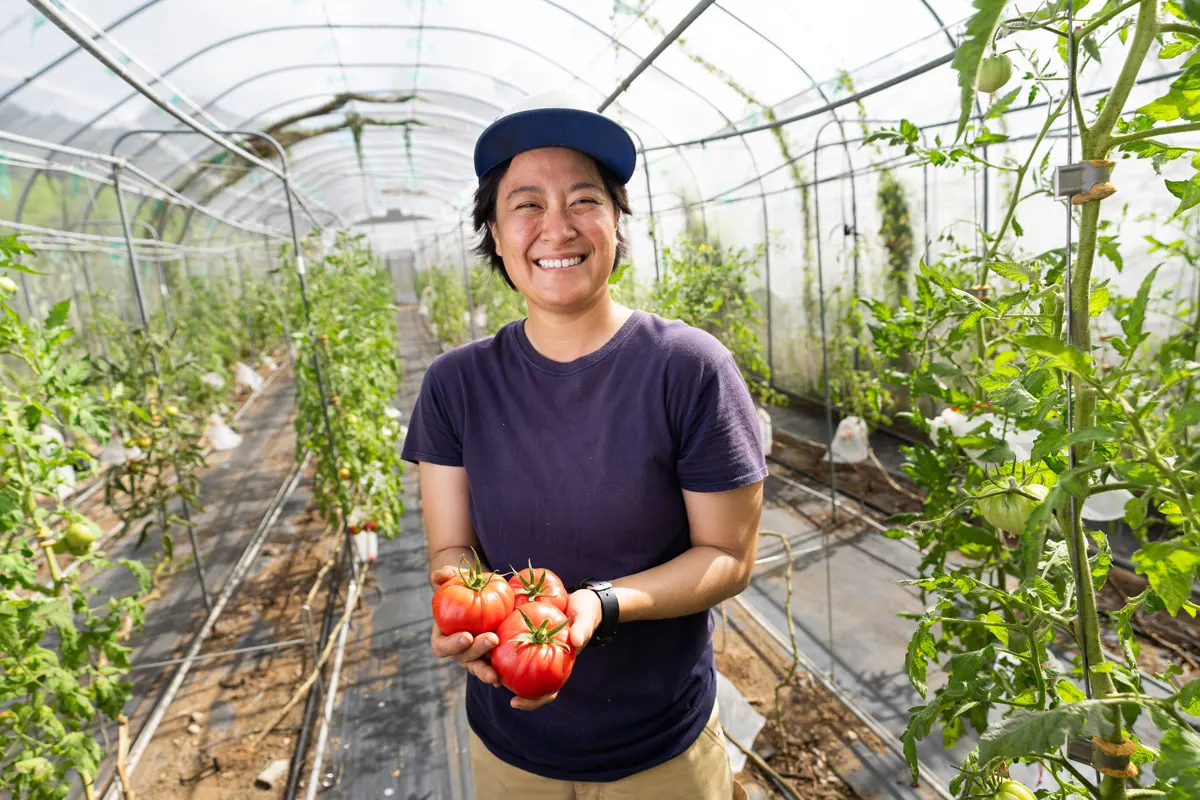
Gina Kanekoa, founder of Kanekoa Farms in Waimānalo on Oʻahu, is all smiles thanks to a partnership between Feed The Hunger Fund, Hawaiʻi Pacific Health and Kamehameha Schools. Kanekoa used Feed The Hunger Fund loan money to purchase a hook-and-trellis system for the farm's tomato crop.
Key Takeaways
- Hawaiʻi Pacific Health, Kamehameha Schools and Feed The Hunger Fund have teamed up to support Hawaiʻi's small farms and food producers.
- More than $1 million in funding is being provided to help local food entrepreneurs access loans and expand their businesses.
- Several small farms across the state have already benefited, improving food equity and boosting Hawaiʻi’s local food systems.
Key Takeaways
- Hawaiʻi Pacific Health, Kamehameha Schools and Feed The Hunger Fund have teamed up to support Hawaiʻi's small farms and food producers.
- More than $1 million in funding is being provided to help local food entrepreneurs access loans and expand their businesses.
- Several small farms across the state have already benefited, improving food equity and boosting Hawaiʻi’s local food systems.
-
Healthier Communities
Partnering to address social needs and create healthier, more sustainable communities. -
Health and Well-Being
Expert advice on managing your health, staying active, safety, and supporting wellbeing.
A healthy diet is a key part of a healthy lifestyle.
In Hawaiʻi, which is separated from much of the world by water, developing healthy food systems is essential to ensuring that our communities have consistent access to fresh local produce and food.
Yet, for many small farms and food producers in the islands, it can be a struggle to find the finances needed to maintain and expand production needed for food security for Hawaiʻi’s people.
Now, an innovative partnership between Feed The Hunger Fund, Hawaiʻi Pacific Health (HPH) and Kamehameha Schools is providing support for local food entrepreneurs.
HPH and Kamehameha Schools recently committed to more than $1 million for Feed The Hunger Fund, with each organization providing $525,000.
HPH committed $500,000 in loans through the HPH Place-Based Investment (PBI) Fund, and an additional $25,000 in grants from HPH Community Benefit funds.
Feed The Hunger Fund is a federally certified Community Development Financial Institution (CDFI) that works to alleviate hunger and poverty by providing small-scale food businesses in Hawaiʻi and California access to funding.
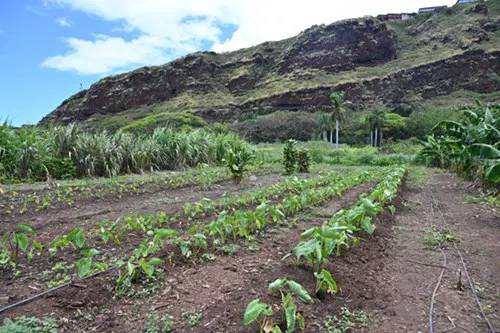
Aloha ʻĀina Poi, located in Makaweli Valley on Kauaʻi, used loans from Feed The Hunger Fund toward a new refrigeration system as well as additional staff and delivery vehicles, e-commerce enhancements and facility upgrades.
Most of Hawaiʻi's more-than-7,300 farms are small farms. In addition, 80% of Hawaiʻi farms have annual sales under $25,000. Low-interest loans would help these entrepreneurs increase food production, but many have trouble qualifying for commercial loans.
Feed The Hunger Fund helps fill that need through microloans and small loans to low-income individuals. Many borrowers are women, Native Hawaiian or are immigrant status living and working in low-resourced communities.
Among the first businesses receiving loans from this Feed The Hunger Fund partnership are:
- Aloha ʻĀina Poi Company, Kauaʻi – Based in Makaweli Valley, Aloha ʻĀina Poi Company’s goal is to provide the highest quality kalo products to reinvigorate and support a thriving mahiʻai kalo (kalo farming) complex in west Kauaʻi. The farmer-owned enterprise is centered on ʻāina-based community enrichment, empowerment and economic development. The company received $150,000, which went toward new equipment and building renovations to expand refrigeration storage capabilities, as well as additional delivery vehicles and staff, e-commerce enhancement and facility upgrades.
- Kanekoa Farms, Oʻahu – Founded in 2021 by Gina Kanekoa in response to the COVID-19 pandemic, which rattled the food and restaurant industry, Kanekoa Farms provides high-quality vegetables to chefs so that they can showcase the beauty of local produce. The Waimānalo-based business secured an agricultural lease agreement on Kamehameha Schools' lands in East Honolulu on Oʻahu. The farm used the $15,000 in funding to buy a hook-and-trellis system for its tomato crop.
- Mokuwai Piko Poi, Hawaiʻi Island – Home of the "Poi Pops," Mokuwai Piko Poi is a family-owned poi mill. Located in Honokaʻa along the Hāmākua Coast of Hawaiʻi Island, Mokuwai Piko Poi sources kalo (taro) from Kauaʻi and Waipio Valley. Mokuwai Piko Poi received $95,000, allowing the business to purchase heavy machinery.
"By investing in the establishment and expansion of healthy, locally sourced food-based businesses, low-income communities gain greater food equity and security, as well as increased economic and environmental vitality," said Patti Chang, Feed The Hunger Fund CEO and cofounder.
Keeping people healthy must begin where they live, work and play. The collaboration with Feed The Hunger Fund and Kamehameha Schools is just one way HPH is engaging organizations throughout the community through social-impact and place-based investments in the areas of affordable housing, education, economic empowerment and food system development.
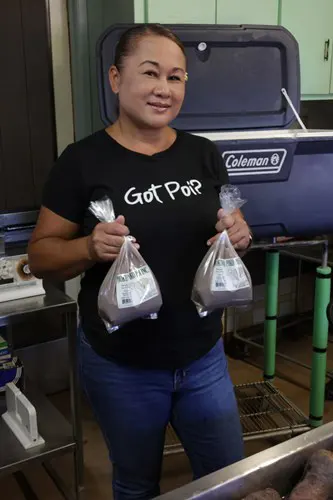
Family-owned poi mill Mokuwai Piko Poi in Honokaʻa on Hawaiʻi Island purchased heavy machinery with its loan from Feed The Hunger Fund.
"At Hawaiʻi Pacific Health, we believe that creating a healthier Hawaiʻi begins beyond the walls of our medical centers through community partnerships," said Michael Robinson, HPH vice president of government relations and community affairs. "A key part of building strong communities are healthy local food systems. Small farms are the backbone of Hawaiʻi's food system and ensuring access to capital for these growers is essential for sustainability. Our co-investment with Kamehameha Schools for Feed The Hunger Fund will help ensure that small farming businesses can continue to produce the foods Hawaiʻi can grow locally."
"Investing in Feed The Hunger Fund will broaden Kamehameha Schools’ agricultural impact," said Kāʻeo Duarte, Kamehameha Schools vice president of community and ʻāina resiliency. "The fund looks to support compelling businesses that will accelerate the revitalization and diversification of food systems, including our own Kamehameha Schools portfolio of ʻāina and tenants. This enables us to more directly invest in enterprises that aim to provide healthy and accessible food to feed Hawaiʻi and beyond, as part of a resilient economy with new jobs and career pathways."
HPH and Kamehameha Schools have partnered on a number of initiatives aimed at improving health, economic stability, education and the social well-being of communities across Hawaiʻi.


