Bariatric Surgical Options
The surgical techniques that result in weight loss work primarily by limiting how much food the stomach can hold. They are often combined with another type of procedure, a gastric bypass, which limits the calories and nutrients that get absorbed from food.
Gastric banding, gastric bypass, and vertical-banded gastroplasty are surgeries that limit the amount of food the stomach can hold by closing off or removing parts of the stomach. These are called “restrictive” procedures. These surgeries also slow down the speed at which the stomach digests food.
Promotion of Weight Loss with Bariatric Surgery
Most patients who have restrictive surgeries feel full and satisfied after eating a small amount of food. They also don’t feel excessively hungry most of the time.
After having these surgeries, people can only eat about a quarter-cup of food at a time. Eating more than that is uncomfortable and may result in vomiting.
Gastric bypass is a surgery that creates a direct connection from the stomach to a lower segment of the small intestine, bypassing the first two parts of the small intestine. This procedure causes food to be poorly digested and absorbed, reducing the calories the body absorbs as well as the nutrients. After having this surgery, people must make a lifetime commitment to take vitamin and mineral supplements and eat a high-protein diet to prevent malnutrition.
Although the results of surgical weight loss procedures are predictable and manageable, side effects can persist for some patients.
Restrictive Procedures
These weight-loss procedures limit the size of the stomach so that you feel full after eating very small meals, and you eat much less.
The weight loss that results from restrictive procedures is not as drastic as the weight loss that results from malabsorptive procedures and gastric bypass; however, they have less risk of malnutrition.
Restrictive procedures can be accompanied by a considerable amount of vomiting.
LAP-BAND®
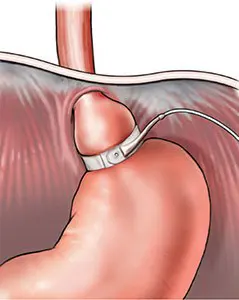
The LAP-BAND® system places an adjustable band at the top of the stomach to create a pouch. The opening from the pouch to the rest of the stomach is adjustable through a small port that rests beneath the skin.
The LAP-BAND is a reversible procedure.
Vertical Sleeve Gastrectomy
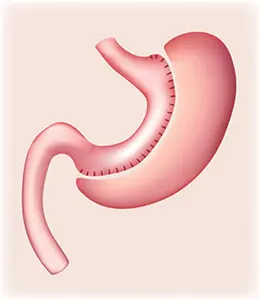
Vertical Sleeve Gastrectomy is a surgery that removes around 80% of the stomach. The new, smaller stomach is the shape of a banana. This procedure does not bypass the intestines, so food is digested and absorbed properly in the intestines.
This surgery removes the ghrelin hormone, which significantly reduces the feeling of hunger. This procedure is not recommended for people with GERD, as it may cause pre-existing symptoms to worsen.
Malabsorptive Procedures
These types of procedures involve restricting the nutrients absorbed by the body by redirecting some of the small intestine.
Biliopancreatic Diversion and Duodenal Switch
Biliopancreatic diversion and duodenal switch (dS) procedure is more effective in achieving excellent weight loss for people who are extremely obese, but it has a higher rate of malnutrition. Malnutrition is rare for those who undergo gastric bypass.
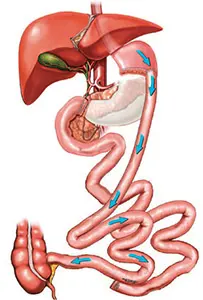
The dS procedure removes about two-thirds of the stomach. It also connects the first part of the small intestine to the third part of the small intestine (skipping the second part of the intestine), so that food moves more quickly through the small intestine. As a result, the body absorbs fewer calories but also fewer nutrients.
This procedure has a far lower risk of liver problems, stomach ulcers, and dumping syndrome than with other malabsorptive procedures.
Combination Procedures
This procedure can be done with open surgery or by laparoscopy, depending on the individual’s needs. Surgical techniques may vary.
Roux-en-Y Gastric Bypass
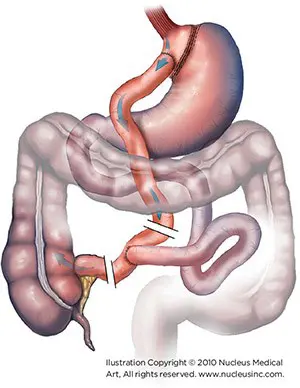
The Roux-en-Y gastric bypass is a restrictive procedure that also results in malabsorption due to bypassing food around the first two sections of the small intestine (the duodenum and the initial part of the jejunum). It carries similar risks as vertical-banded gastroplasty, including pouch stretching, breakdown of the staple lines, and leakage of stomach contents into the abdomen. However, because gastric bypass causes food to skip the duodenum, where most iron and calcium are absorbed, risks for nutritional deficiencies are higher.
Anemia may result from malabsorption of vitamin B12 and iron in menstruating women, and decreased absorption of calcium may result in osteoporosis and metabolic bone disease.
Patients are required to take lifelong nutritional supplements that usually prevent these deficiencies.
Risks of Gastric Bypass
The risks of gastric bypass include dumping syndrome, in which the stomach contents move too rapidly through the small intestine, causing nausea, weakness, sweating, faintness, and, sometimes, diarrhea after eating. It is also possible that eating sweets will cause weakness, sweating, and light-headedness.