
A Legacy of Care
Kapiʻolani Medical Center for Women & Children traces its roots to a bold vision shaped by Queen Kapiʻolani and guided by compassion, leadership, and a deep commitment to the people of Hawaiʻi. More than a century later, that legacy continues to guide the care we provide every day.
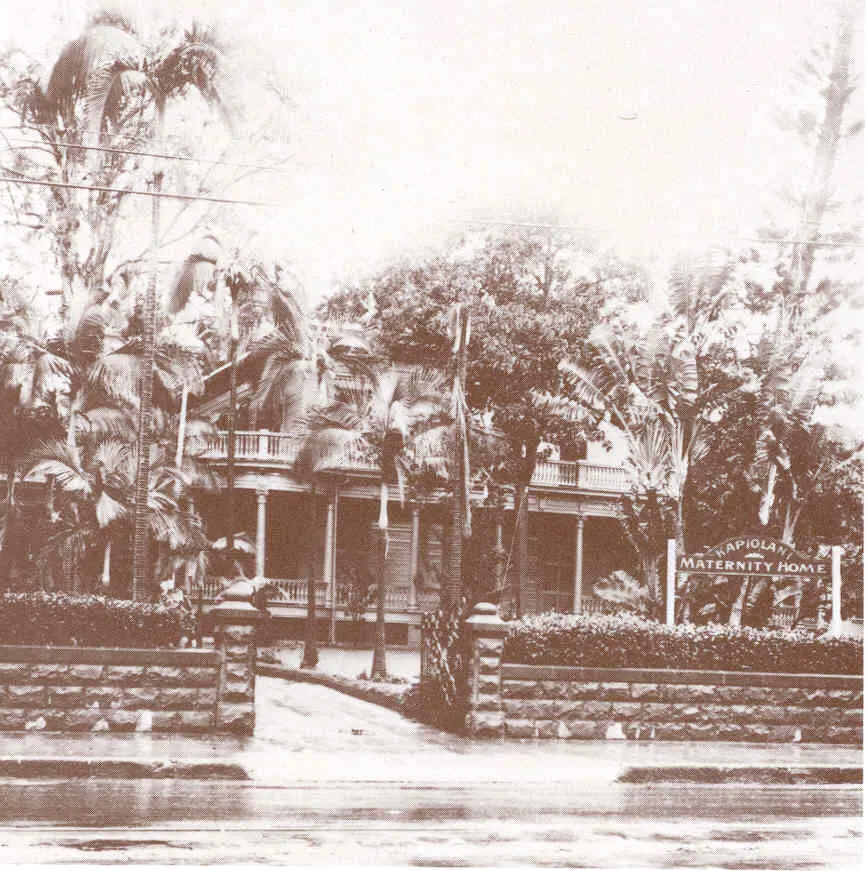
Kapiʻolani Maternity Home (1890)
In the late 1800s, childbirth in Hawaiʻi carried significant risks for mothers and infants. After traveling abroad and visiting hospitals, Queen Kapiʻolani returned home determined to create change.
On June 10, 1890, she founded the Kapiʻolani Maternity Home, establishing a dedicated place where women could safely bring new life into the world.
Her vision marked a turning point in the care of women and newborns in Hawaiʻi, setting a new standard for compassion and safety.
Kauikeolani Children’s Hospital (1909)
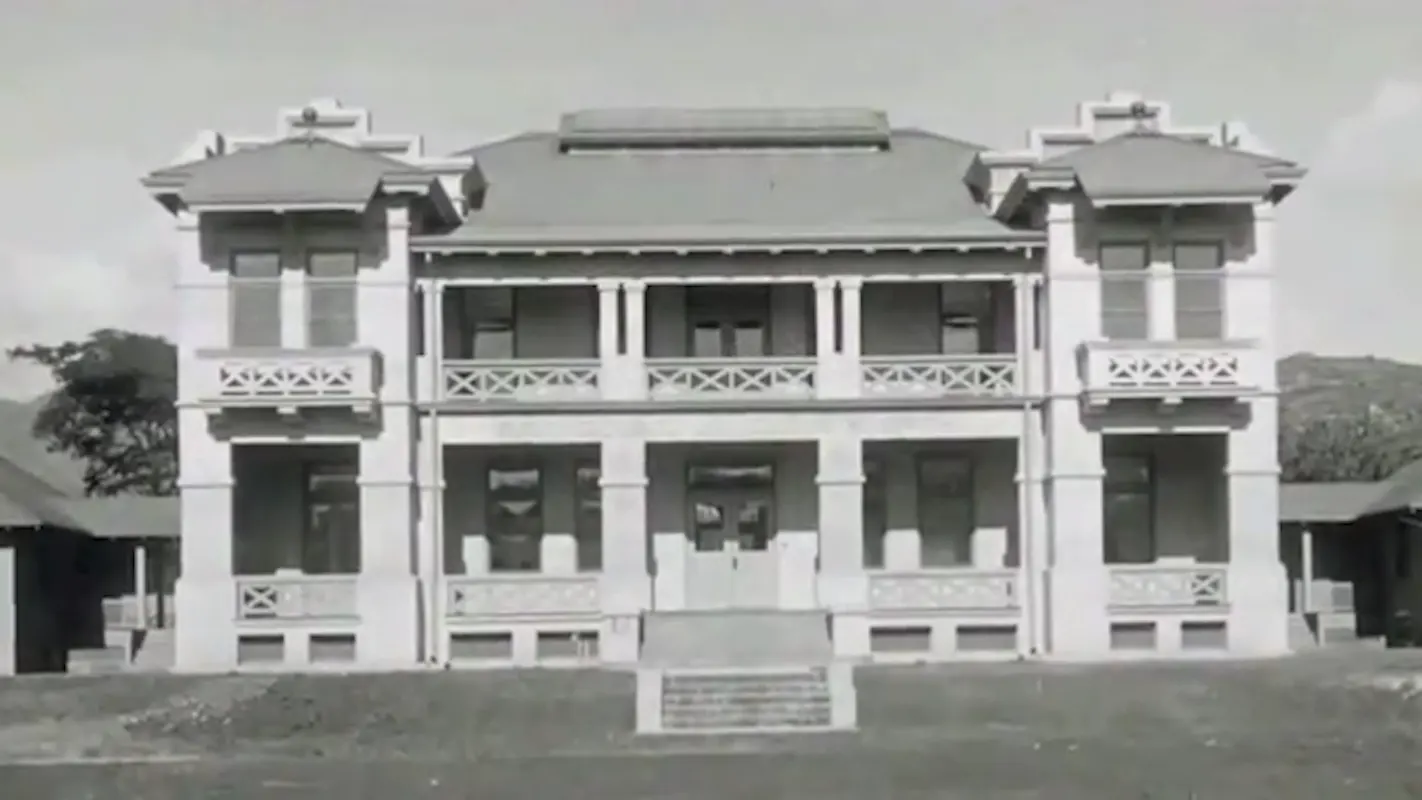
As the need for specialized pediatric care grew, that same commitment expanded to Hawaiʻi’s keiki.
On Nov. 25, 1909, Kauikeolani Children’s Hospital opened its doors, providing focused care for children and supporting families across the islands.
Together, these two institutions laid the foundation for a continuum of care for women, children, and families.
Kapiʻolani Medical Center for Women & Children (1978)
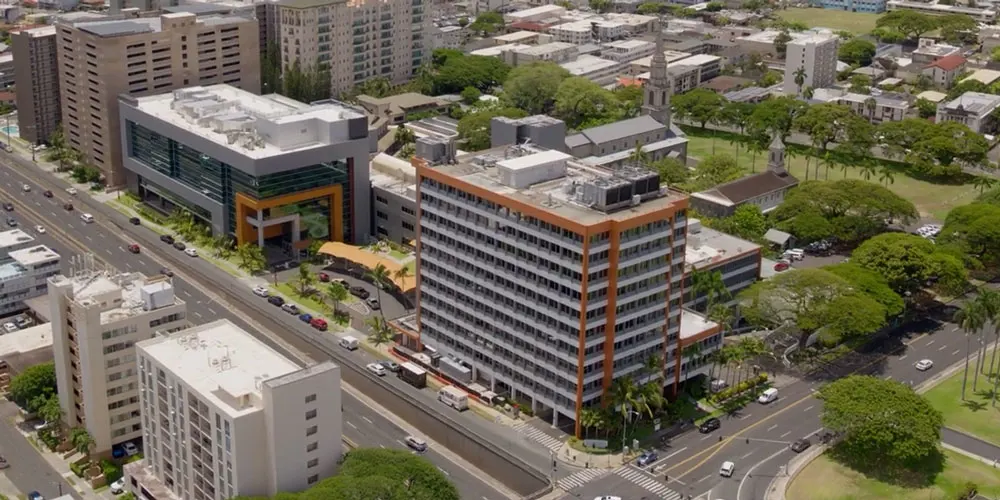
On Sept. 7, 1978, Kapiʻolani Hospital and Kauikeolani Children’s Hospital merged to form Kapiʻolani Medical Center for Women & Children, bringing their shared mission together under one roof.
Today, Kapiʻolani continues to build on more than a century of care, serving families across Hawaiʻi and the Pacific with a commitment to compassion, innovation, and excellence.
We are guided by Queen Kapiʻolani’s enduring motto:
Kūlia i ka nuʻu – Strive for the highest.
View transcript
This is a story that dates back 100 years. It's a story of Hawaiʻi's love for its children.
The year was 1907. Honolulu was a bustling young city, developing with all the modern advances of its time. And yet, two out of every seven children did not survive to see their first birthday. This was of grave concern to many people in the community, including Dr. James Jud, a prominent local surgeon, and Governor Sanford Dole. Good morning, Governor Dole. Good morning, Dr. Jud. How is the health of the community?
Good in some respects and not so good in others. Why is that? We have no place to take care of sick children. When a contagious disease like dtheria or whooping cough starts in the family, usually all the other children catch it. What should be done about it? We should have a children's hospital. Well, then let's have a children's hospital. Come to my house tomorrow evening and I will invite some people to be there who might be very interested in such a project. At the meeting, Dr. Jud spoke of the hundreds of children who could be saved with proper medical care. Albert Wilcox, a successful plantation owner, knew all too well the need for a children's hospital. At age six, he traveled with his father to Boston by ship to receive medical care. The trip was arduous, and it meant a year away from the home he loved. Mr. Wilcox wasn't about to let other children endure the same fate. He offered a gift of $50,000 to open a hospital for Hawaiʻi's children and asked the community to match his contribution. And match they did. Enclosed. Please find a check in your favor for $1,500. Yours very truly, Charles M. Cook. I now have the pleasure to enclose my check for $5,000 with the hope that the hospital may soon be so far established as to begin the good work contemplated and fully meet the anticipations of its friends. I remain Charles, our bishop. I would be glad to assist with a donation of $200 and will be glad to pay this amount at any time when called upon. Yours very sincerely, Aubrey Robinson. We closed here with, "Please find our donation for the Children's Hospital. We are yours truly, City Mill Company, CKIE." Large and small, the donations rolled in until all that was needed was a name. Because of the generosity of Mr. Wilcox, the hospital was soon to open, named in honor of his wife, Emma Kawiolani, Napoleon Wilcox. Mrs. Wilcox has been such a good teacher. wife and mother that I quite sympathize with her husband in his wish that the hospital should bear her name. If sufficiently endowed and properly directed, it will be a very useful institution in Honolulu, as I certainly wish that it may be. November 25th, 1909 was a festive day as Kawi Kaolani Children's Hospital opened its doors on Kuakini Street. For many children, their futures were now a little more secure.
Over the next two decades, the hospital grew steadily, doubling the number of patients it served. In accordance with the hospital's mission, no child was turned away because of a family's inability to pay. Soon, it was clear a larger, more modern hospital was needed. On January 10th, 1950, ground was broken to replace the original hospital with a new facility. Now armed with muchneeded space, Kawiolani Children's Hospital added specialty care. This marked yet again a new era in treating Hawaiʻi's critically ill newborns and children. Additional services included a rehabilitation center, a residency training program to train future doctors, specialty clinics for cerebral palsy and epilepsy, a birth defect center, neighbor island transport, and a pulmonary center to care for the hospital's sickest patients. We got one of the first 12 grants of this pulmonary NIH grant in 1967 and we had a first pediatric surgeon and we got the first grant that developed really our neon needle intensive care at Ki Kilani Children's Hospital as they had since the beginning. The community continued to raise money to support the nonprofit hospitals programs and operations. Kawiolani Children's Hospital had become the place to treat children. Across town, the Capolani Maternity Home, founded by Queen Capolani in 1890, had become the place to have a baby. With over 150 years of history between them, the hospitals combined resources and moved into a new hospital on Punoho Street in 1978. It made sense for the children's center to come together to with the women's center because if women are delivering sick babies, uh it makes sense to have the the team to take care of them right here in the same institution. Now we could develop an enale intensive care unit that could take care of a lot more than it did before. And as a result of that, all the subsp specialty things that needed intensive care could be developed. oncology programs, bone marrow transplants, neurosurgery, many, many, many, many, many things developed as a result of the two coming together. Today, Capiolani Medical Center for Women and Children is a nationally recognized nonprofit hospital dedicated to caring for Hawaiʻi's families.
Discover the rich history of Kapiʻolani Medical Center for Women & Children, from its beginnings as Kapiʻolani Maternity Home and Kauikeolani Children’s Hospital to the trusted institution it is today.