Facelift
Facelift surgery, or a rhytidectomy, is an operation designed to remove the major folds or wrinkles of the face and neck that naturally occur with aging. It may be combined with an eyelid operation (blepharoplasty) that addresses the aging process in the eyelids or a forehead lift to address loose skin in the forehead and brow.
Request a Consultation See Before & After Gallery
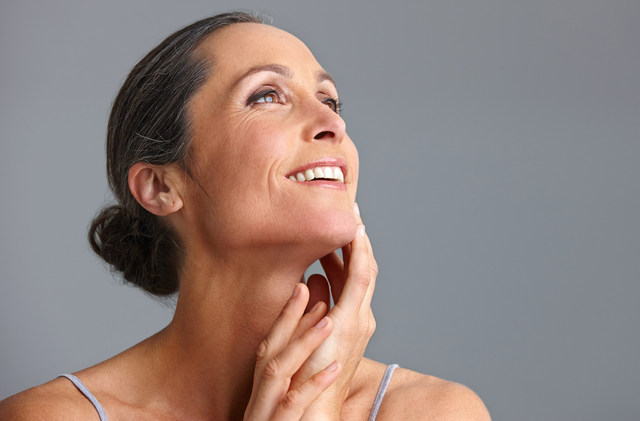
Who Should Consider a Facelift?
A facelift, or rhytidectomy, is for individuals who want to:
- Rejuvenate the face
- Reduce sagging skin, deep folds or loss of volume caused by aging, gravity and other factors
- Eliminate sagging cheeks, jowls and less-defined necklines
- Lift the facial tissues
- Address the signs of advanced aging without the use of fillers
6 Reasons to Choose Straub Benioff Medical Center Plastic Surgery for Your Facelift Procedures
- 1You’ll achieve a natural, well-balanced appearance.
A facelift can make you look younger and refreshed. Our goal is for your face to be more lifted, volumized and sculpted – not stretched or pulled. - 2We have Hawaii’s Top Doctors.
Dr. David Cho and Dr. Robert Schulz are both board-certified in plastic surgery and have been repeatedly recognized among Hawaii’s Top Doctors by Castle Connolly. - 3You’ll have access to the leading-edge deep plane technique.
You may be eligible for a facelift using the deep plane technique, which elevates the deeper tissue planes of the face, and:- Sculpts the jawline
- Improves full cheekbones
- Does not pull or stretch the skin layers
- Creates a healthier, volumized and natural appearance
- 4We’re experienced with both cosmetic and reconstructive procedures.
Entrusted with some of Hawaii’s most-challenging reconstructive cases, we have amazing insights to enhance complex cosmetics cases. - 5We have the latest information, so you’ll be well-informed.
With access to the most updated information on facial rejuvenation safety, our team will spend the time with you to provide honest education about the responsibilities of having facial procedures and answer any questions. - 6We make safety our top priority.
Our medical protocols are designed to prioritize your safety and support optimal healing.
Are You Ready to Enhance Your Appearance?
Do You Have Questions?
Request a ConsultationSee Before & After Gallery




Facelift Before & After Gallery
Testimonials from Facelift Patients
Request a Consultation for Facelift/Rhytidectomy Procedures
Facelift FAQs
-
Am I a good candidate for rhytidectomy or facelift?
The best candidate for a facelift is a person whose face and neck have begun to sag, but whose skin still has some elasticity and whose bone structure is strong and well-defined. Most patients are in their forties to sixties, but facelifts can be done successfully on people in their seventies or eighties as well.
-
How is the surgery performed?
Please note that each surgeon approaches the procedure in their own way, based on what is best for you and in consideration with other procedures you may be doing at the same time.
Incision Site: Incisions usually begin above the hairline at the temples, extend in a natural line in front of the ear (or just inside the cartilage at the front of the ear), and continue behind the earlobe to the lower scalp. If the neck needs work, a small incision may also be made under the chin.
Lifting the face and neck: The surgeon separates the skin from the fat and muscle. Fat may be trimmed or suctioned from around the neck and chin to improve the contour. The surgeon then tightens the underlying muscle and membrane, pulls the skin back, and removes the excess.
Completing the surgery: The operation generally takes 3.5 to 4 hours or longer if you're having more than one procedure done. Every patient is different; your doctor will discuss the details of your specific surgical plan.
-
Will the facelift surgery result in permanent scarring?
The scars from facelift surgery usually fade and are barely perceptible.
In some patients, especially younger ones, endoscopic surgery can be used to lift the eyebrows, remove frown lines, elevate the cheek and jowls, and tighten the neck. This endoscopic surgery can be done with tiny scars. However, if there is excessive skin, it must be removed for the best results through standard facelift incisions.
-
How long does the facelift procedure take?
The operation generally takes 3.5 to 4 hours or longer if you're having more than one procedure done.
-
What can I expect before the procedure?
Initial consultation: Your surgeon will evaluate your face, skin and underlying bone structure, and discuss your goals for the surgery.
Be sure to tell your surgeon if you smoke or are taking any drugs or medications, especially aspirin or other drugs that affect clotting.
Your surgeon will check for medical conditions that could cause problems during or after surgery, such as uncontrolled high blood pressure, blood clotting problems, or the tendency to form excessive scars.
Preparing for surgery: Your surgeon will give you instructions to prepare for surgery. This will include guidelines for the following:
- Eating and drinking
- Smoking
- Drugs or medication - especially regarding aspirin or other drugs that affect clotting
If your hair is very short, your surgeon may suggest growing your hair out before surgery so that it's long enough to hide the incision sites while they heal.
-
Will I be able to drive home after surgery?
After a suitable recovery period, you can go home with a family member or responsible adult. If you have other procedures done at the same time, or if you have no one to be with you at home, it may be wiser to stay in the hospital overnight.
Whether your facelift is being done on an outpatient or inpatient basis, you should arrange for someone to drive you home after your surgery, and to help you out for a day or two if needed.
-
How long is the recovery time for facelift procedures?
Generally, allow at least three weeks after a facelift before resuming full social activity and employment.
It is possible that, with modest makeup, you will be able to return to activity much sooner. We suggest that three weeks be available for recuperation.
-
How can I hide things during the time until I return to normal?
Your surgeon may discuss post-operative camouflage techniques with you prior to your surgery. While almost everyone has some sort of temporary side effect such as bruising and swelling, there are makeup techniques that both men and women can use almost immediately to disguise them.
Camouflage cosmetics include three basic types of products:
- Concealers to hide incision lines and discolorations
- Contour shadows to disguise swelling
- Color correctors to neutralize color in reddened skin
Color correctors disguise yellowish discolorations or the pinkness that follows chemical peel and dermabrasion. Lavender neutralizes or removes yellow and green has a similar effect on red.
It will take a little patience and practice to master camouflage techniques, but most post-op patients feel it's well worth the effort.
-
What can I expect after the procedure?
First 48-72 hours:
- A bandage is wrapped about the face and head/neck area for approximately 24 to 48 hours. This may be replaced with a smaller one for an additional day.
- If you've had a drainage tube inserted, it will be removed.
Week 1: You should remain on Oahu for one week after your operation.
Week 2:
- It is normal to experience a certain amount of swelling and discoloration of the facial skin for 10 to 14 days following the procedure, but major discomfort is unusual.
- Some numbness of the cheek and neck will be noted for several weeks. This is not unusual and does not indicate a complication. It should return to normal after several weeks. This numbness should not affect facial expression or motion.
- Sutures are removed in stages and are usually all out in approximately 8 to 10 days.
Sleep:
- Keep your head and chest elevated on two to three pillows at all times.
- Sleep on your back rather than your side. Sleeping on your side will cause you to become more swollen on that side.
Driving:
- Avoid driving for at least one week after surgery.
Smoking:
- DO NOT smoke for at least three to four weeks.
Exercise:
- Avoid high impact exercise for one month after surgery.